
Giant Defy Advanced Pro 1
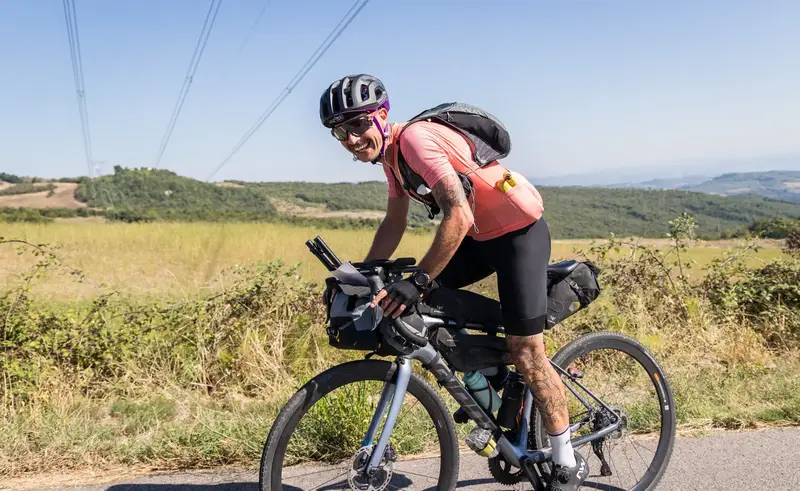
My long-term test of the Giant Defy Advanced Pro 1 endurance bike, ridden in bikepacking mode across Corsica, Sardinia and Sicily: frame, wheels, groupset and setup.
Giant Defy Advanced Pro 1
The endurance bike for every kind of road, with no compromise on comfort or performance
Giant’s endurance bike, a true ultra-distance machine
I have been travelling by bike for almost fifteen years, and as a guide, traveller and commuter I have ridden many different bikes. I am not a professional mechanic, but I have had my hands on all kinds of models and, over time, learned their strengths and weaknesses by testing them in the field. Designers’ ideas often don’t match what the trail actually throws at you, but that is definitely not the case with the Giant Defy, a bike built on all of Giant’s experience.
Giant hardly needs an introduction: it is one of the largest bike manufacturers in the world. Personally, it is one of the brands I feel most connected to, for several reasons. I lived in Taiwan, Giant’s home country, and in China, and there I saw the huge range of bikes the company makes. Giant shops were everywhere, and I ended up making friends with the shop staff and trying all sorts of models, some of them sold only in Asia: folding bikes, city bikes, mountain bikes, road bikes. So Giant is one of the brands I know best. Today, after a long test, I want to tell you about the queen of endurance bikes, the GIANT DEFY ADVANCED PRO 1.
As an ultra-distance rider I sensed the bike’s potential early on, but I wanted to test it properly on different terrain, bikepacking, before giving you my opinion. So at the end of November, with a few quiet days between work commitments, I decided to cross three of the largest islands in the Mediterranean: Corsica, Sardinia and Sicily. Corsica in particular is a fascinating, sparsely populated island. As soon as I got off the ferry I faced very long climbs, and with villages many kilometres apart the logistics were tricky, so I had to rely completely on my bike. It was on this wild, remote island that I saw what the Giant Defy can really do.
Frame
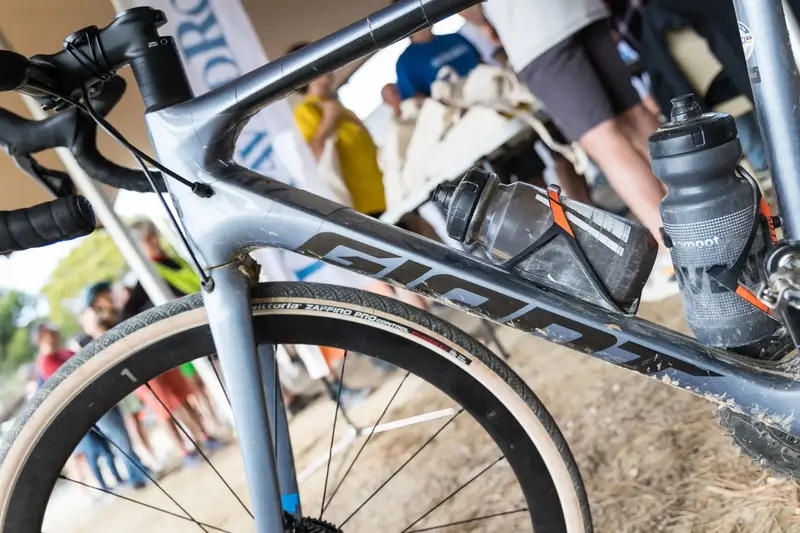
The Defy is an endurance bike: it may look like a road bike, but its geometry is designed for comfort, so you can spend many hours in the saddle without suffering. It is made for gran fondos as well as long rides. The carbon frame and the D-Fuse technology in the seatpost and handlebar absorb vibrations, which makes it comfortable even on dirt roads. It has powerful disc brakes and takes tyres up to 35 mm. As the name suggests, Defy is a bike that lets you push past the limits of a classic endurance bike. The frame geometry transfers power very well: the tapered OverDrive 2 head tube makes it precise in corners, while the MegaDrive down tube and PowerCore bottom bracket give accurate handling and efficient pedalling.
Wheels and tyres
The Defy comes with Giant SLR 1 carbon wheels. Giant makes high-end carbon components, just think of its spin-off CADEX, whose wheels I reviewed some time ago in an article you can read here (in Italian). We all know how well a carbon rotating mass performs, and I notice the difference both when accelerating and when holding speed: once it’s rolling, the Defy is really smooth to pedal. The wheels have 32 mm Giant tyres that performed very well on both paved and unpaved roads. Yes, because on a bike like this you can easily ride white roads without technical sections. In more than 2,000 kilometres the tyres held up both on the smooth tarmac of Corsica and on the rough roads of Sicily, where the tarmac is crunchier than a cannolo shell. Thousands of kilometres and not a single puncture.
Groupset
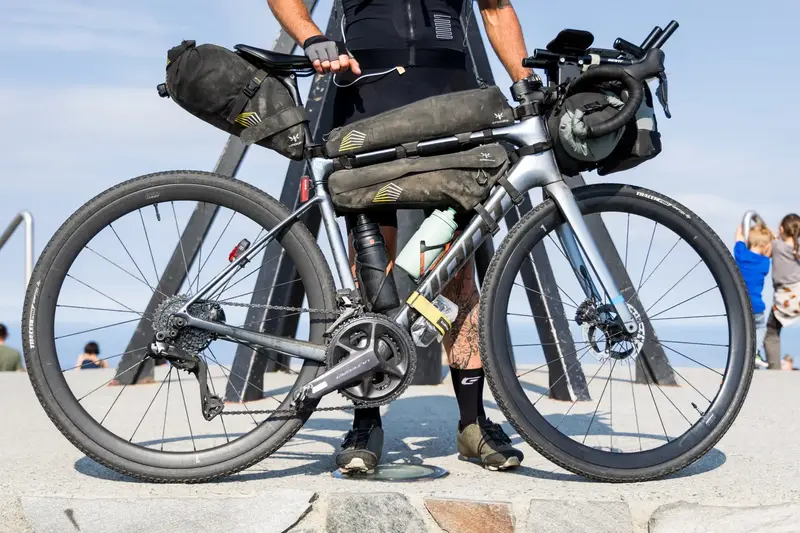
My Giant Defy has a SHIMANO ULTEGRA Di2 2×12 groupset with a 50-34 crankset and an 11-34 cassette. I am a big Shimano fan and have used electronic shifting on road bikes for several years: I find it very reliable. What I like most is how easy and fast the shifting is. On long days in the saddle you shift a lot, day after day, and in the past I have suffered from tendinitis in my forearms that I had to manage during a trail. Being able to change gear with a simple click instead of pushing a lever matters a lot to me, especially for ultra-cycling. The disc brakes have great modulation and stopping power, essential for the sense of security a bike should give you. During the whole test I never had to recharge the shifting battery, and I really liked the E-Tube app, which lets you check battery levels and adjust the gears.
Handlebar and seatpost
The D-Fuse seatpost and handlebar deserve a mention: they are designed to work together, absorbing road shocks and vibrations so you can ride comfortably and with power. One thing I appreciated most on the trip was how comfortable they stayed even with the saddle bag and handlebar bag fitted.
Bikepacking setup
For the trip I used Apidura bags: the 9-litre RACING SADDLE PACK, the 2-litre RACING LONG TOP TUBE PACK and the 4-litre RACING FRAME PACK. At the front I used Ortlieb’s HANDLEBAR PACK and ACCESSORY BAG. I packed winter clothing, although I had good weather and mild temperatures for the whole trip.
Conclusions
The Giant Defy is a versatile, reliable bike, ideal both for ultra-cycling and for everyday riding. It is designed for cyclists who want comfort and performance on different surfaces, somewhere between road and gravel.
I checked with the mechanics who set up the bike, and they confirmed what I thought: a high-end product.
If you have any doubts or questions about the Giant Defy, get in touch on Instagram and I will be happy to tell you more.
You can see the stages of my trip on my Komoot and Strava profiles, or follow my rides on Instagram.
For technical details and more about Giant bikes, visit their website.