
Hydration backpack for bike travel
Should you ride with a hydration backpack? Why I use one on bike trips and ultra-distance events, and the features I look for: compact, stable, with useful pockets.
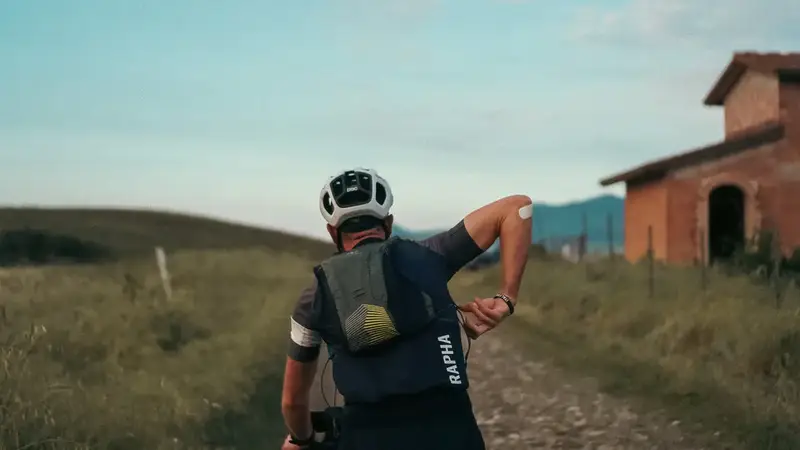
Hydration backpacks for bike touring
Pros and cons for your bike trips
A few thoughts on choosing a hydration backpack
Preparing a bike trip is always exciting. Choosing the route and the gear is one of the parts I love most. I have been travelling by bike for fifteen years, and I have learned that you never stop learning. The basic kit for a three-day trip and a three-month trip may be the same, but the details change with the season and with where you ride.
When I help riders prepare a trip, the hydration backpack is one of the questions that always comes up. In this article I want to share my opinion and my experience with them.
Why choose a hydration backpack? In bike travel and bikepacking everyone has their own opinions and preferences, and they deserve respect. Still, I think it’s important to think for yourself and choose what suits your needs. Over the years I have heard all kinds of opinions and tried many backpacks of different sizes on different trips. Today I will only talk about hydration backpacks, not other kinds of backpacks.
There are two main reasons to choose a hydration backpack. The first is to carry extra water. When water is scarce, a hydration pack holds 1.5 to 3 litres, which can make all the difference (as at the Seven Serpents, where I rode long stretches with nowhere to refill my bottles). The second has to do with your bikepacking setup, which sometimes leaves no room for bottles.
A third reason, especially in ultra-cycling, is to stop less often: carry more water and only stop when you really need to.
Staying hydrated is essential. I have learned to take small sips every five minutes or so to keep my body hydrated, even when I’m not thirsty. When water is hard to find, a hydration backpack becomes a key piece of kit.
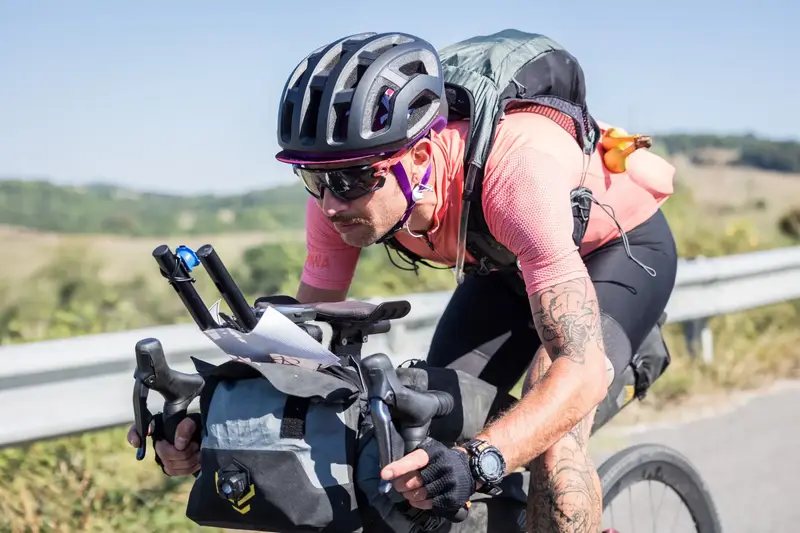
What should a hydration backpack have?
These are the features I think matter:
Compact: I prefer a small backpack, so I don’t overload it. A backpack that’s too big becomes uncomfortable when you carry it for many hours.
Stable and adjustable: it must sit close to your back and not move while you ride. A backpack that moves around can cause trouble, especially off-road. Adjustable straps let you fit it to your body.
Extra pockets: pockets on the front of the shoulder straps are handy for energy bars, your phone or soft flasks. Some backpacks also have pockets on the back for other items or food.
Water resistance: the backpack doesn’t need to be fully waterproof, but some water resistance helps. It’s a good idea to keep what’s inside in plastic bags.
One downside: a backpack can be a nuisance when you need to put on or take off a warm or waterproof layer. How much depends on the backpack and on how long it takes to adjust the straps again.

Conclusions
Overall, I have become a fan of hydration backpacks, as long as they have the features above. The advice of experienced friends such as Simone and Christian helped me make up my mind.
This summer I used the Apidura hydration vest on my ride across Europe on the Giant Defy at the North Cape 4000. I will review it soon, so stay tuned and sign up for the newsletter. More articles on the gear I use on my trips will follow.
I hope you enjoyed the article. If you would like to ride in Tuscany with routes and logistics already sorted, have a look at my self-guided tours.
You can watch a series of reels about the Apidura hydration vest here, and follow the whole North Cape 4000 series on my Instagram profile.
Thanks for reading, and see you on the next adventure.