
Tembaine Desert Rally: eight days on an e-bike in the Tunisian Sahara
Eight days and 310 km on an e-bike across southern Tunisia, from Tamerza to the dunes of Tembaine: my Tembaine Desert Rally 2026, with tips if you want to go.
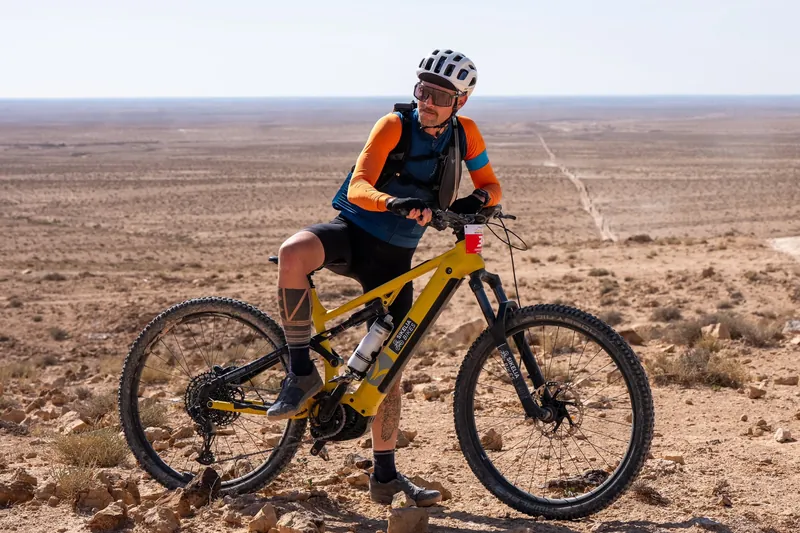
Some journeys start long before the first pedal stroke. My Tembaine Desert Rally started on a Saturday evening in Rome, with a group of strangers who, a week later, would feel more like a caravan than a list of participants.
I was there as a guest of Alessandro Bettini, the founder of the rally, and as the host of the Tembaine Bar, the evening talks at camp. That gave me a rare kind of freedom: I could ride with the fast riders, stay with the slower groups, follow the crew and see how an event like this works from the inside. This is what eight days on an e-bike in southern Tunisia looked like.
The Tembaine Desert Rally at a glance
- What: a multi-day e-bike rally across southern Tunisia, with roadbook navigation and different categories for racers and for riders who want the experience without the stopwatch.
- When: November. The 2026 edition ran from 7 to 15 November, travel days included.
- Where: from Tamerza, close to the Algerian border, to Douz and the Tembaine area inside Jebil National Park.
- Distances: five stages recorded on my Strava, between 19 and 83 km each, for about 310 km and 1,650 m of climbing in total. On the sixth day I swapped the bike for a jeep.
- Who it is for: riders ready for long days, sand, heat and a bit of navigation, and curious about the desert.
Rome, the night before
The welcome drinks in Rome were the first time we were all in the same room: racers, first-timers, the media team, a few champions and people who had never ridden off-road for more than a few hours. By the end of dinner, names had become faces and faces had become stories.
We slept near Fiumicino airport, which made sense the next morning, when the shuttle left at 6:00. Early, but by then the journey had already started in our heads.
From Tunis to Tamerza: the long road south
The flight to Tunis is short, about an hour and twenty minutes. The road south is not: more than eight hours by bus, with a Tunisian guide on board and the landscape changing slowly outside the window.
We reached Tamerza late in the evening. The bikes were already lined up outside the Tamerza Palace, waiting for us in the dark. There was just enough time to look at them, have a generous buffet dinner and listen to Alessandro’s opening speech, the kind that sends you to bed with the feeling that something important is about to begin.
A practical tip: buy an eSIM before you leave and change some dinars at the airport. Out there, both make your life much easier.
First day on the bike: learning to read a roadbook
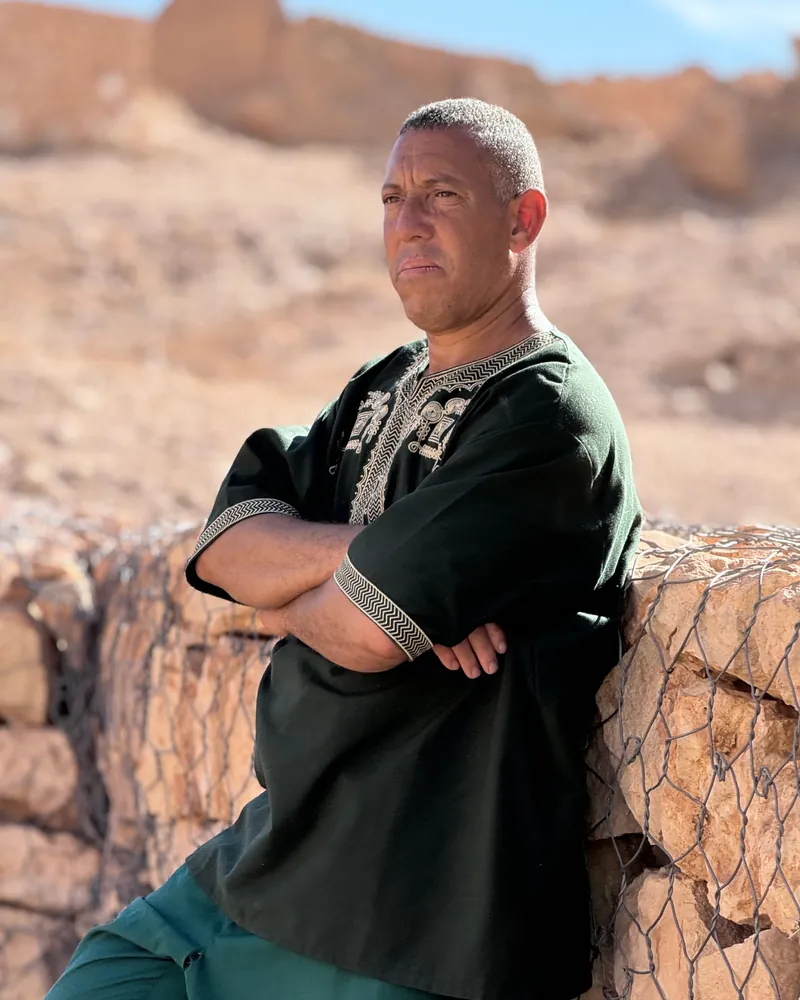
The first stage was a special stage around Tamerza, designed to get us used to the roadbook.
The roadbook is the heart of the Tembaine’s identity: it comes from the African rally raids, from the Dakar, and it asks you to navigate with notes, distances and symbols instead of following a line on a screen.
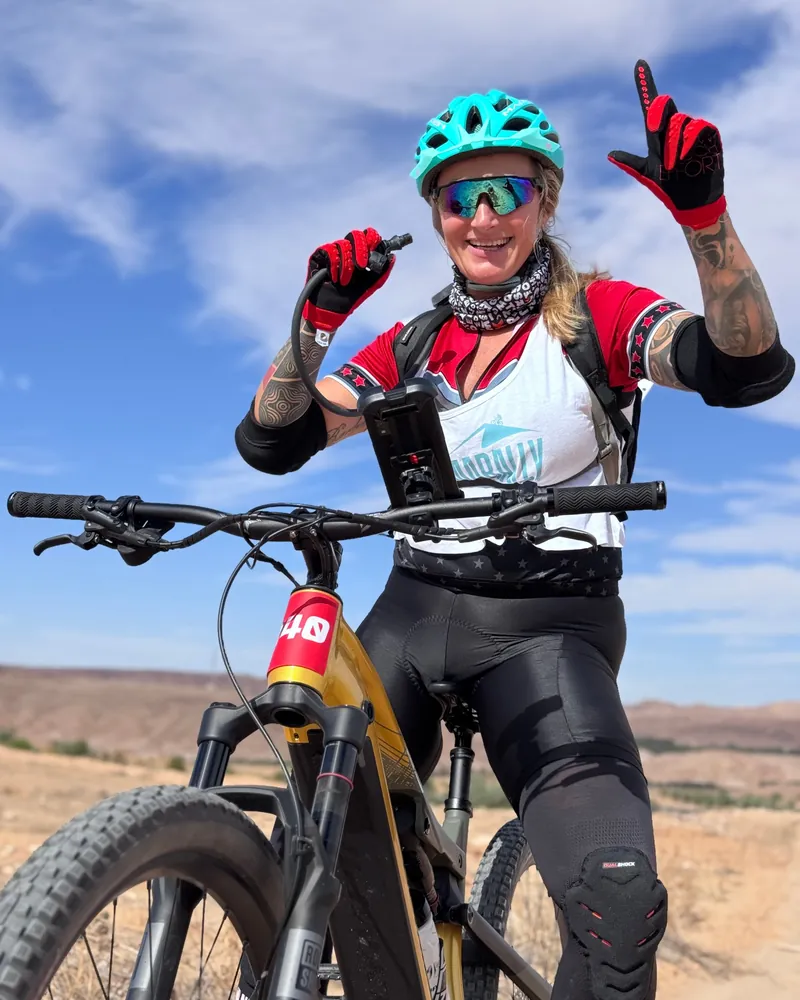
The few riders who had studied it before leaving flew. The rest of us learned on the job. I rode with Donne in Sella, the women’s group led by the great Laura Cola and supported by Ducati, and we got lost more than once. Every time, we found the way again together, and along the way we helped other riders who were just as lost as we were. It was one of the most fun days of the week.
In the evening I hosted my first Tembaine Bar, filmed by Vincenzo: stories of the day, laughter and the first signs of tired legs.
The big descent, the dry lake and a lesson about water
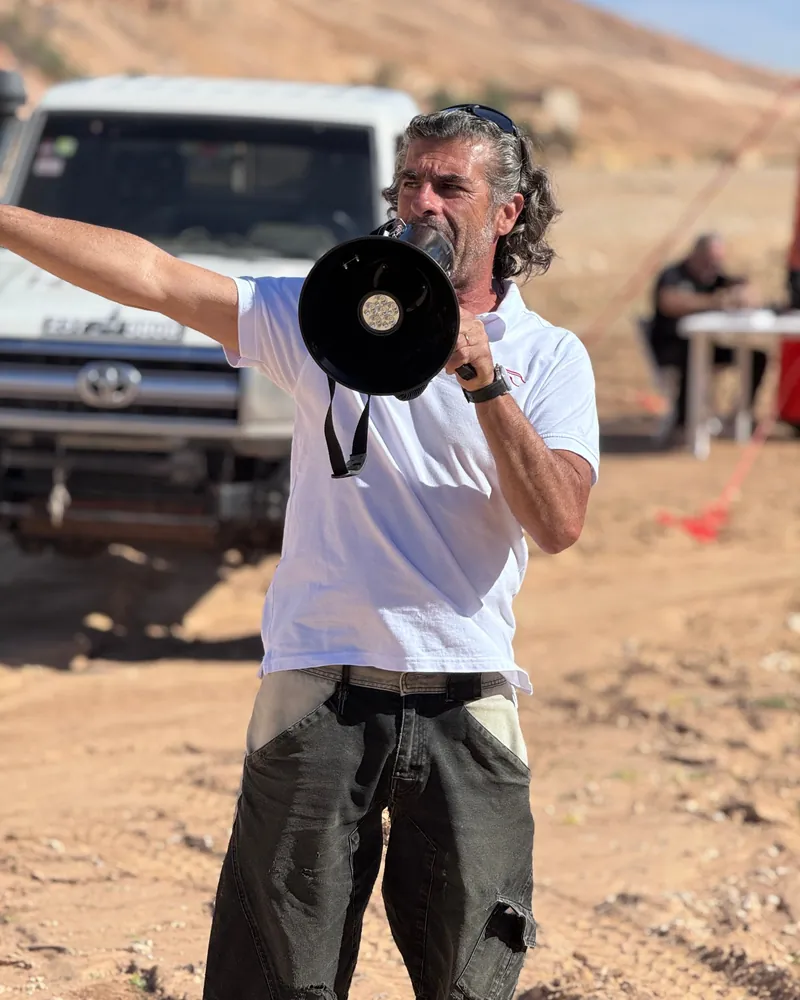
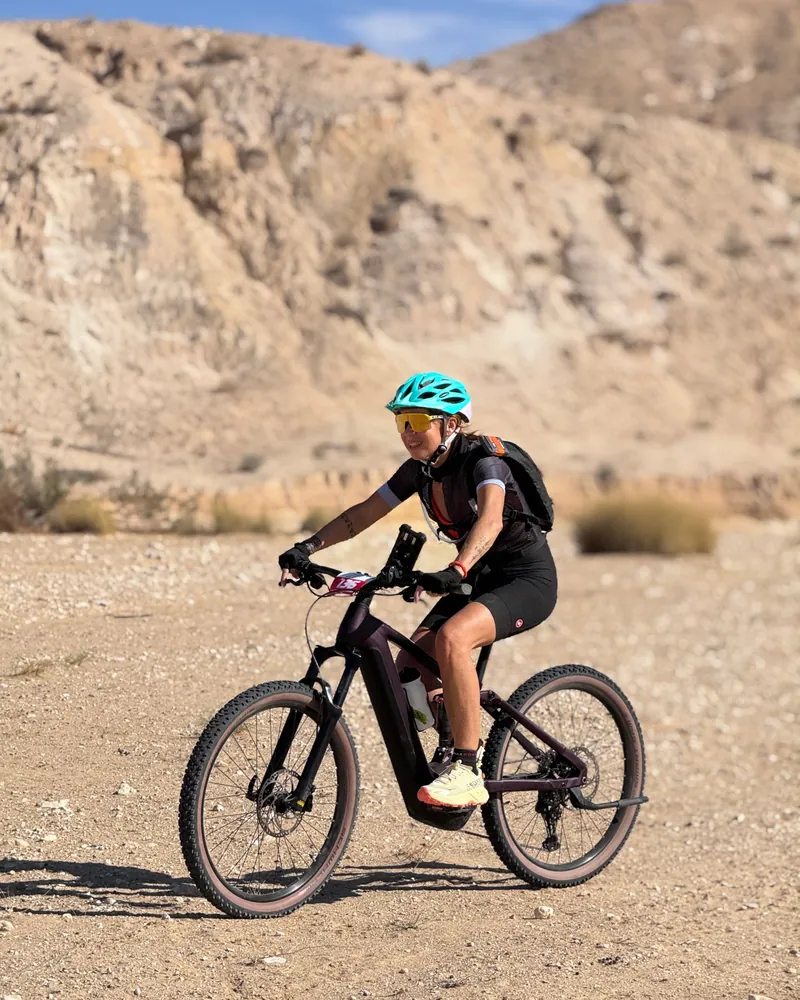
The next day was the longest of the week for me: 83 km, starting from Redeyef. It started with a famous descent that everybody expected to be very technical. In the end it was rideable: broken tarmac and a long series of bends, with the valley opening up below. From Redeyef, at around 600 metres, the stage drops all the way to below sea level.
At the bottom I met Flavia, and we rode together for the rest of the stage. The desert has its own way of stretching distances. At one point we stopped to count our water and food and decided how to ration them. When we reached the refreshment point, past kilometre 60, we had half a bottle of water left between us. I am telling you this because it is the most useful lesson of the week: in the desert, carry more water than you think you need, and always know where the next refill is.
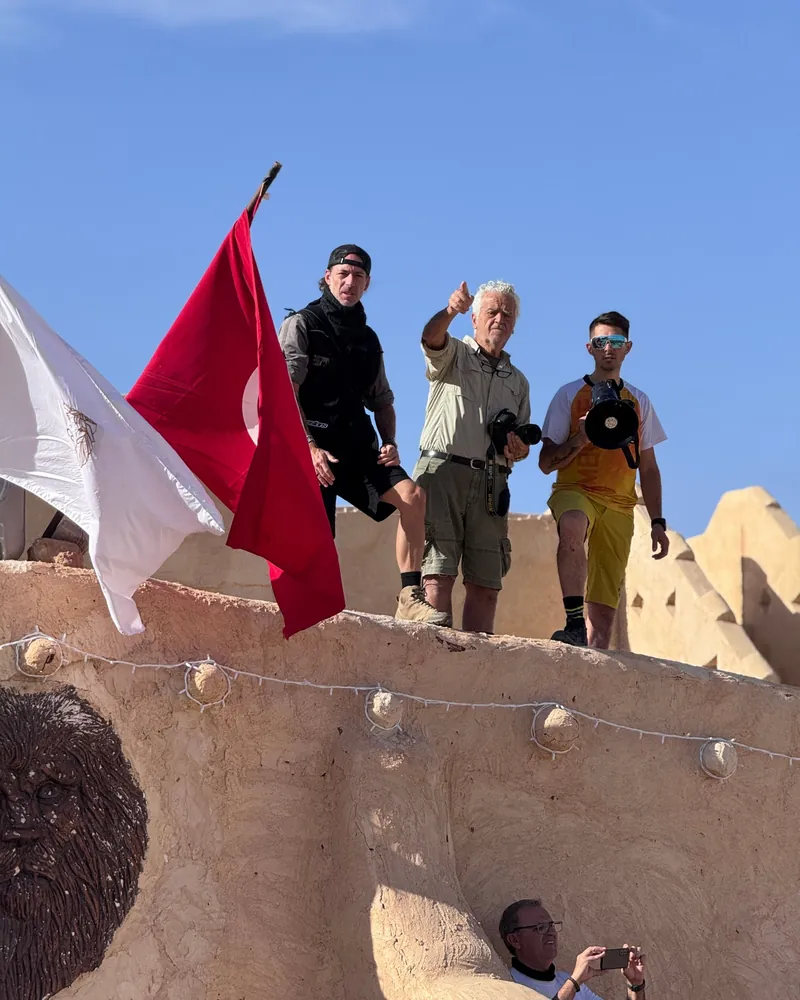
The final section crossed the dry bed of Chott el Gharsa, below sea level, flat and endless, one of the most beautiful moments of the whole rally. The finish was at Mos Espa, the Star Wars set near Nefta. Honestly, after the lake, it felt like a film set and not much more. The desert had already stolen the show.
A slower day together, and a school in the desert
The following day we all rode together as one group, at an easy pace. With the GPX track on my bike computer, I ended up working as a shepherd, keeping the group on the right road between punctures and long discussions about which way to go.
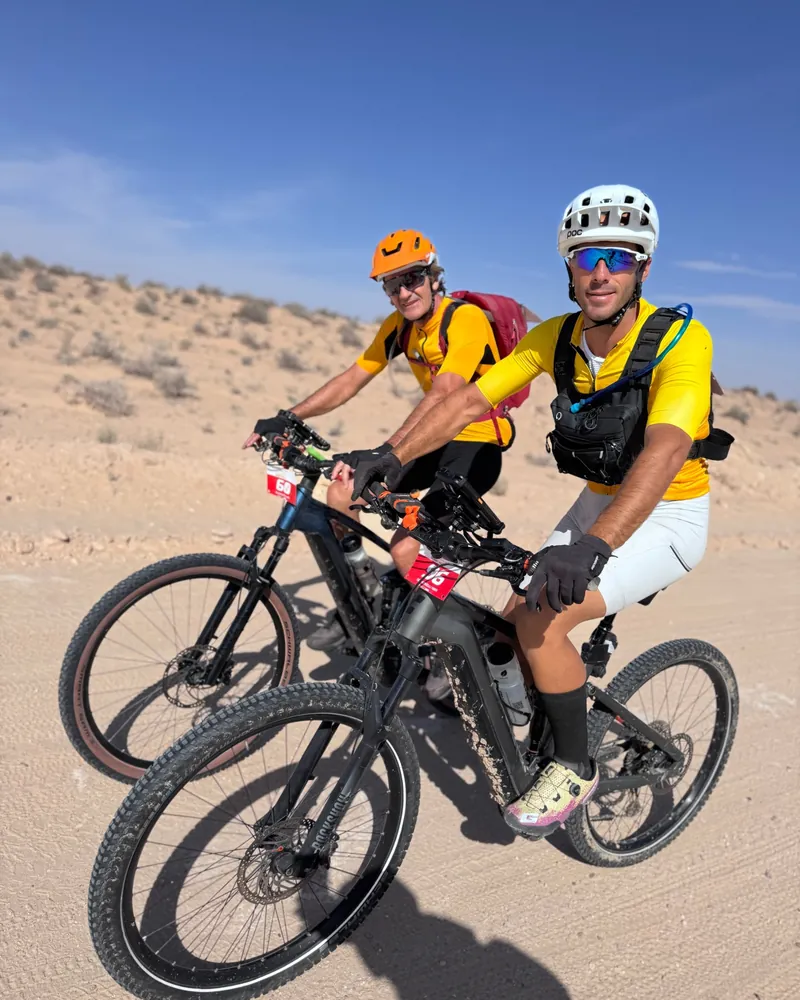
After about 50 km we stopped for lunch at the school in Djenna, where the association Bambini nel Deserto has donated a kitchen, with a contribution from the Tembaine Desert Rally. It was a reminder that we were guests in a place where people live, work and send their children to school.
Then the last 17 km to Douz, known as the gateway to the Sahara, and the El Mouradi hotel: a swimming pool and the feeling that the real desert was finally close.
Into the Tembaine desert, ahead of the sandstorm
This was the day everybody was waiting for. A 44 km ride took us from Douz to the Café Restaurant La Tente, the official start of the stage and the last crossroads before the dunes. The final kilometres were on sand, where an e-bike drinks battery much faster than you expect: if you have never ridden on sand, keep a margin.
From there the stage ran long and beautiful towards the gates of Tembaine, on secondary tracks at the edge of Jebil National Park. Then the wind changed. A sandstorm was coming, and the staff stopped many of us and drove us by jeep for the last kilometres to the camp. It was the right call, and in that moment you understand why a rally like this needs jeeps, drivers and people who know the desert.
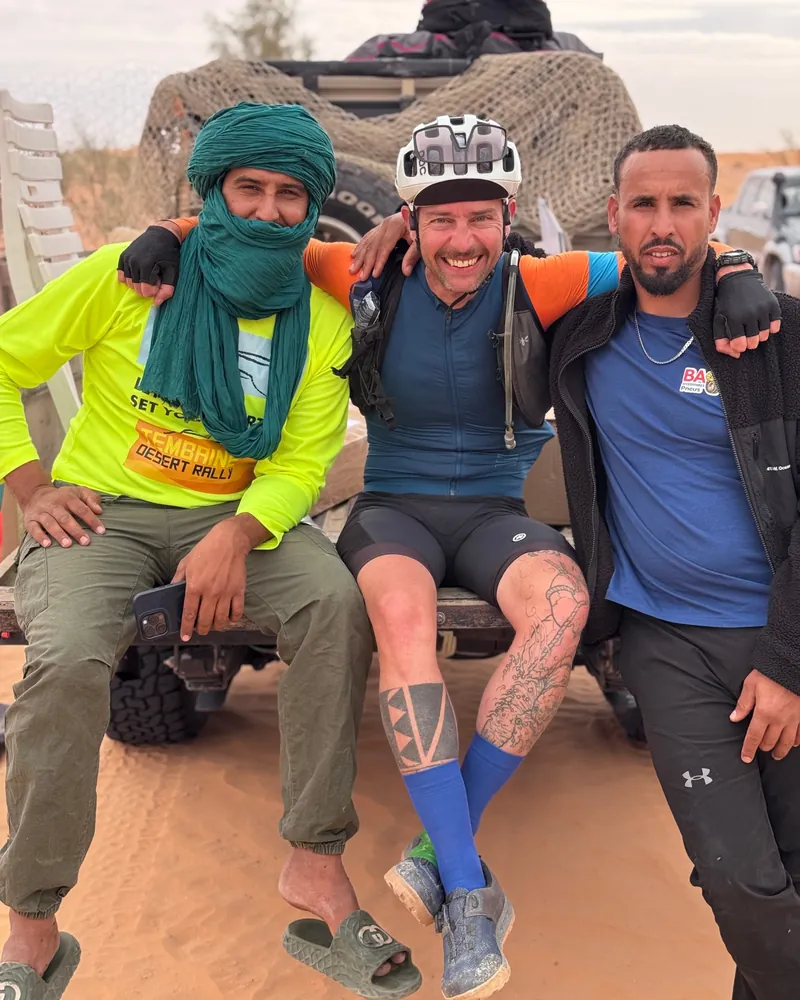
Tiniri Camp, close to the rock of Tembaine, is a special place, and we stayed there two nights. The packing list had asked us to bring warm clothes for the desert nights. In the end the cold never came, but I had everything with me, and I would pack exactly the same way next time.
The spider stage, seen from a jeep
The next day was a spider stage: a loop of about 40 km around the camp, with the roadbook as the only guide. I left my bike at camp and spent the day in a jeep with Skander, the rally’s Tunisian drone pilot.
We spent time with the Bedouins who live in the desert around Tembaine and helped get lunch ready for the riders. From the outside I could see why the stage was so popular: you always come back to the same fixed point, you learn to trust the notes, and getting lost becomes part of the game instead of a risk.
In the afternoon the photographers took over, with shoots for the partners of the event, including the Talaria electric motorbikes that followed the rally with their own small media team. In the evening, another Tembaine Bar under the desert sky.
Back to the Porte du Désert
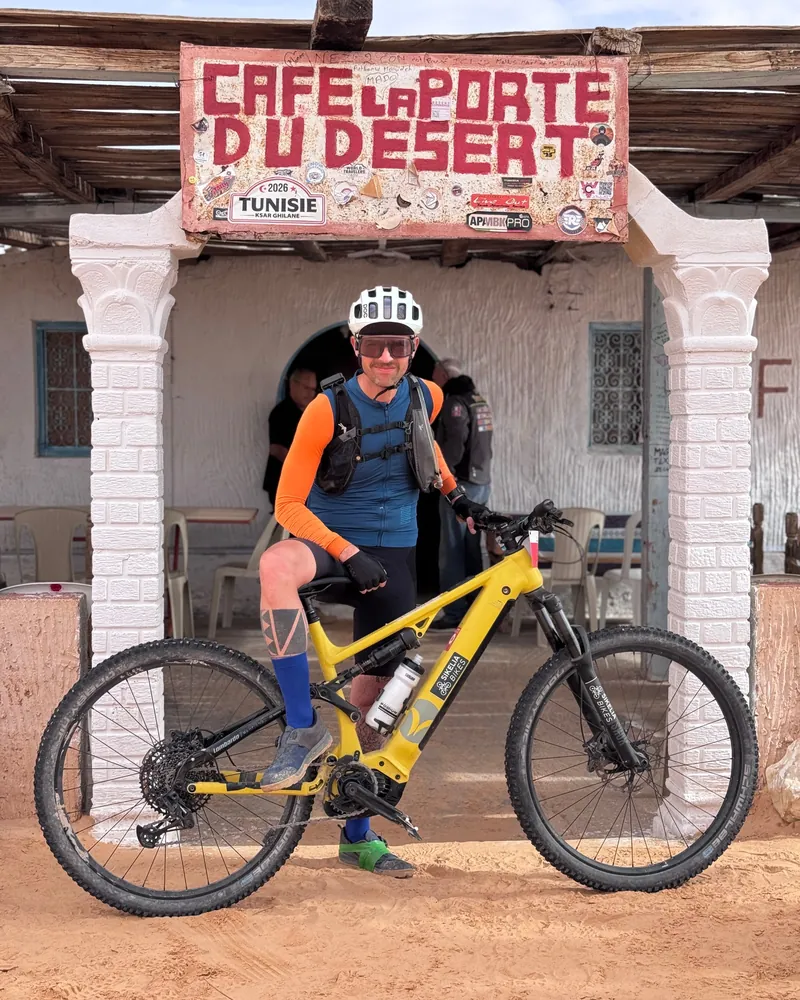
The last stage ran the route backwards, all the way to the Café La Porte du Désert. The arrival was one of the most emotional moments I have seen at an event: hugs, tired faces and a lot of emotion. A week before, many of them did not know each other.
The jeeps took us back to Douz. Some went for a massage, some never left the pool. We had lunch at La Rosa, the restaurant in Douz where all the rally crews go, and a coffee in the centre of town. In the evening, the closing ceremony and the awards.
The road home
The last day was a long transfer north to Tunis, with a stop at the Roman amphitheatre of El Jem: an unexpected and beautiful break, and a good lunch. Then the flight to Rome, one more night in the same hotel near Fiumicino, and the next morning everybody went home a little different from how they had left.
The caravan
If I think back to the Tembaine, I think first of the people. The racers and the first-timers. The women of Donne in Sella. Flavia and our half bottle of water. Champions like Miguel Martinez, riding the same tracks as the amateurs. The photographers and videomakers, who turned every day into images. Vincenzo, always where something needed solving. Skander, who showed me the desert from his jeep. The Tunisian team, the drivers, the mechanics who kept more than a hundred e-bikes running and charged. And Alessandro, who imagined all of this and brought it to life.
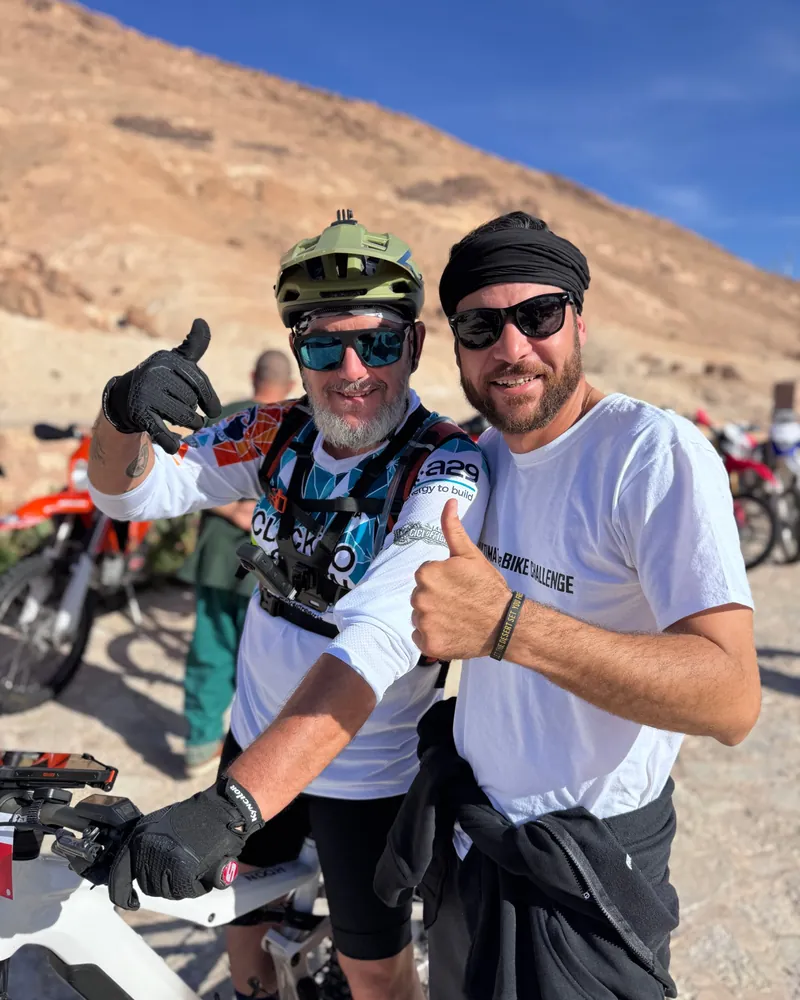
None of what I lived would have been possible without the organisation behind the rally and the support that kept the e-bikes rolling across the desert. What stays with you, though, is the caravan: a group of people who meet in Rome as strangers and leave Tunisia as a small tribe.
If you are thinking about riding the Tembaine
- Study the roadbook before you leave. Even a few evenings of practice make a huge difference.
- Pack for cold nights, even if they may not come.
- Carry more water than you think and know where the next refill is.
- Manage your battery on sand: it drains much faster than on hard ground.
- Sort out eSIM and dinars before you need them.
- Come with an open mind: transfers are long, plans can change, and the desert decides more than you do.
The Tembaine is not for everybody, and it is not meant to be. If you are looking for an adventure that tests your legs, your patience and your sense of direction, and gives you back a week you will tell stories about for years, it is one of the most special events I have ridden.
If you want to know more about riding in the desert, just write to me at info@peppeesposto.cc. And if you would rather start somewhere greener, have a look at the tours I design in Italy. Thanks for reading.
Cover photo: Andrea Cogotti.