
Bikepacking series, episode 3: planning
The third episode of my bikepacking series: how to plan a bike trip, choose a destination, pack light and navigate with maps, apps and GPS.
Why planning matters
Introduction
Welcome to the third episode of my bikepacking series, written in collaboration with Selle San Marco. Today we look at a key part of any bikepacking trip: planning.
You will see how to prepare your trips well, reduce the risks and enjoy every ride with peace of mind.
Why planning matters
Planning is one of the foundations of any trip. Often a trip starts from an inner urge to challenge yourself, the need to get away, or the dream of reaching a particular goal. Personally, I believe every trip is first of all a journey inside yourself, a chance to discover sides of your personality you didn’t know. At this stage doubts and uncertainties are natural, but I always remember the Chinese proverb: “a journey of a thousand miles begins with a single step”. So the important thing is to set off, and the rest will follow.
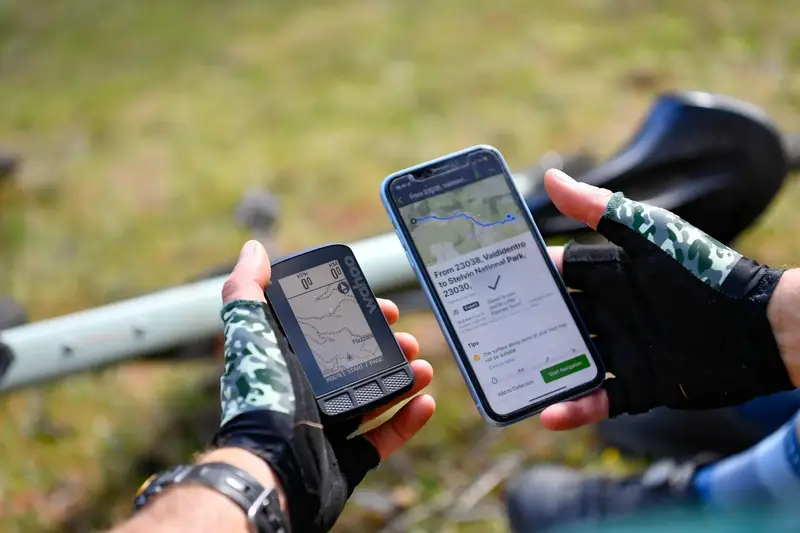
From experience I know that organising the logistics of a bike trip can be complicated and take a lot of time, especially at the beginning. Careful planning greatly reduces the risks of an adventure. Luckily there are now many apps and programs that make detailed planning easy: you can plan your stages and know the distance and climbing in advance. Tools such as Komoot and Ride with GPS work for beginners and professionals alike, and they make planning far easier than in the days when I travelled with a map and compass.
Over the years I have come to rely more and more on these tools, and route planning has become my job. I have designed thousands of kilometres of routes, with maps and logistics, and I still plan every one of my trips carefully. If you are new to bike travel, my advice is to plan balanced stages, with the right mix of effort, fun and adventure. It’s not how far you ride that counts, but how you ride it: approach the trip in a relaxed, positive way, and good experiences will follow.
Organise your logistics well and make sure you always have enough water and food. Always wear a helmet, protect your skin with sunscreen and try to avoid riding in the hottest hours. Plan your stops carefully and, if you are travelling in a country with a food and wine culture like Italy’s, reward yourself with a good meal at the end of the day.
If you camp, make sure you rest properly by choosing safe places to sleep. Recovery is crucial, especially over several days of riding. If you prefer to stay in accommodation, you will travel lighter and enjoy a well-earned hot shower at the end of the day; just make sure the hotel has a safe place for your bike.
There would be many more tips to share, but the most important thing is to approach every trip in the right spirit: relaxed, honest and respectful, towards yourself and the places around you. The bike is the ideal way to explore a country like Italy, and it gives you a way of travelling like no other.
How to choose a destination
Italy is one of the most fascinating countries in the world, full of beautiful cycling routes. When you plan a route from one place to another, my advice is to choose quiet back roads.
Planning carefully this way, I have crossed Italy from north to south while meeting very few cars. Starting with the region where you live, or simply the area around you, can show you familiar places in a new light when you see them from the saddle.
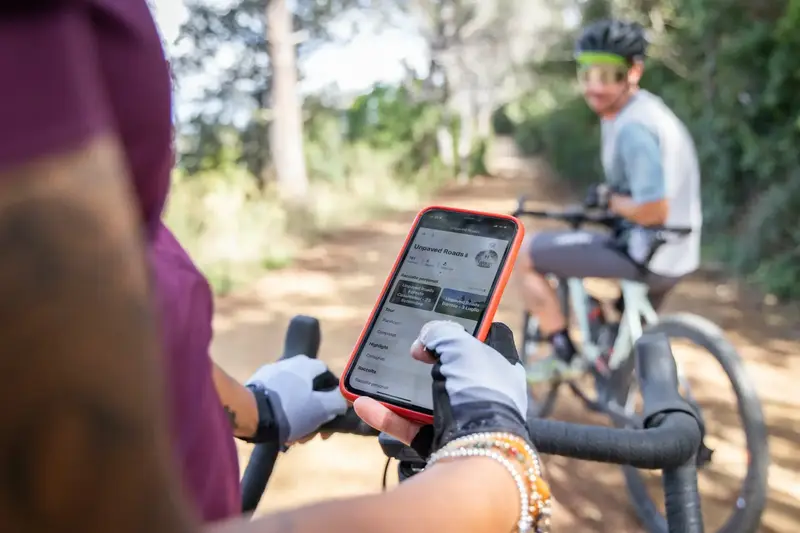
If you want to try bike travel without having to plan it all, one of the many events organised in Italy is a great place to start. Well-known bikepacking events like the Tuscany Trail, gravel weekends like Unpaved Roads or road bikepacking adventures like The Grand Escape are great ways to get into the culture of adventure cycling.
Most of these events give you a set route in advance, so you can study it and make sure the stages (which each rider plans for themselves) suit your fitness. The beauty of these events is that they are not races: there is no time limit, and everyone rides at their own pace.
Search online and on social media to discover the many routes and events in Italy: they are some of the best ways to get started with bikepacking and bike touring.
Minimalism in bikepacking
Bikepacking is a practical lesson in minimalism. The limited space in your bags forces you to think carefully about every piece of gear you bring. Every item has to be essential, and ideally useful in more than one situation.
So you may find yourself replacing some of your gear with more compact, multi-purpose versions. A useful trick is to organise the space in your bags carefully, as described in the previous episode, and to pack your things, especially clothes, in plastic bags. Bikepacking bags are designed to be waterproof, but it’s always better to be safe, so you always have dry clothes. This is worth doing in warmer months too, when the weather can change suddenly.
Packing clothes in separate bags also keeps them organised and easier to find. Aim for light gear: the less weight you carry, the less tired you get. Still, it takes time to really learn these principles. It took me more than ten years to refine them; on my first trips I carried far too many things I didn’t need. Now, with well-chosen gear, I can travel for weeks or even months with the same kit, which shows how important a minimalist approach is in bikepacking.
Navigation: maps, apps and GPS
My first trips were romantic adventures, guided by a paper map marked with a highlighter and a compass on my handlebar. Those years taught me the value of discovery and gave me practical skills in map reading and compass navigation. I believe these skills are fundamental, and I always make a point of passing them on. Understanding traditional maps is the basis for understanding modern navigation, which is now all about GPS and bike computers.
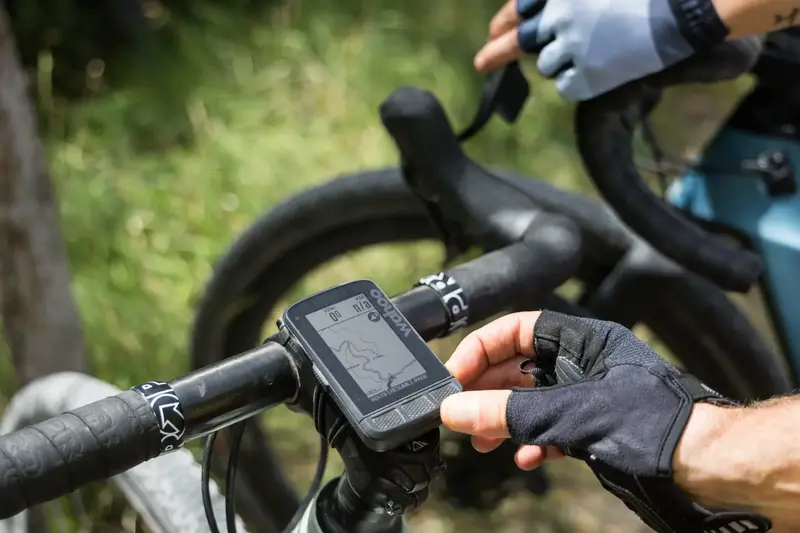
GPS computers have transformed navigation. Today you load your route onto the device, mount it on your handlebar and let it guide you. They also give you a lot of useful information along the way: distance ridden, distance to go, average speed, details on climbs and descents, and the elevation profile. Knowing your average speed, for example, is essential for estimating riding times, a key part of planning a bike trip.
If you ride a lot, I highly recommend investing in a good GPS computer. Over the years I have tested the best devices on the market and I am happy to share advice from my own experience. I can no longer imagine riding without one, especially on multi-day trips, when I plan the tracks around the distance I want to ride or the places I want to see. A GPS computer is essential, especially for keeping an eye on the climbs and managing your energy.
Alongside the GPS, I always prepare some travel notes with resupply points and places to find water, food or a bed. GPS computers have been a real revolution in bike touring, and they have helped non-competitive events like the ones above to grow.
Don’t miss the next and last episode
To follow the series and get new tips, sign up for my newsletter. Stay tuned, because the fourth episode is all about safety and online resources, to help you find even more information for your bike trips.
Thank you for being part of this community of passionate cyclists.
See you in the next episode, on the bike!