
Trek Domane SLR 7 Gen 4
The Trek Domane SLR 7 Gen 4 tested over thousands of kilometres in Sardinia and Sicily: comfort and performance in one bike for long trips.
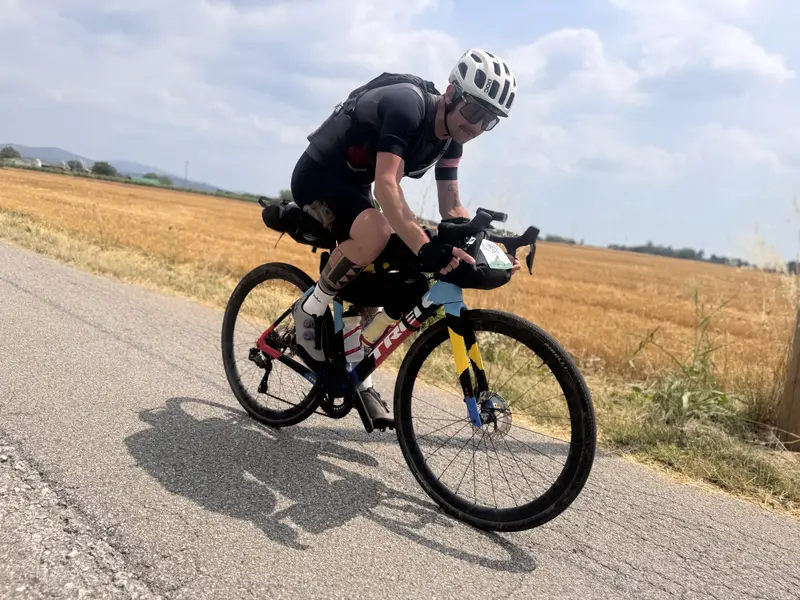
The ideal companion for long road trips… and beyond
Tested over thousands of kilometres in Sardinia and Sicily
In recent years I have ridden a lot of bikes. Some were very fast but uncomfortable, others very comfortable but too slow. Then there’s the Trek Domane SLR 7 Gen 4, which does something rare: it brings together the two souls of touring cyclists, the one who wants to stay comfortable in the saddle for hours and the one who likes to go fast.
I wanted to test it in the field, not in a lab. I took it to Sardinia, all along the west coast, and then to Sicily, where I rode hundreds of kilometres on the island’s most authentic and bumpy back roads.
On both trips I loaded it up, pushed it to the limit and asked it to be everything: travel bike, adventure companion, reliable ride in all conditions. And it always delivered, quietly and with surprising solidity.
What the Domane is, and why I wanted to try it
The Trek Domane has been one of the world’s best-known endurance bikes for years. It was designed to handle the cobbles of the spring classics in northern Europe, to stay comfortable on rough roads and to keep you company on long days in the saddle.
It wasn’t only its reputation that made me want to try it. It was the promise, built into the design of the bike, of a ride centred on the pleasure of pedalling. I needed a bike that went beyond pure performance and gave me something more: the feeling that every kilometre could be enjoyed, not just ticked off.
If you want to understand what really sets an endurance bike apart from other categories, I wrote an article about endurance bikes, their geometry, and why they are the ideal choice today for long-distance travel and for growing as a cyclist.
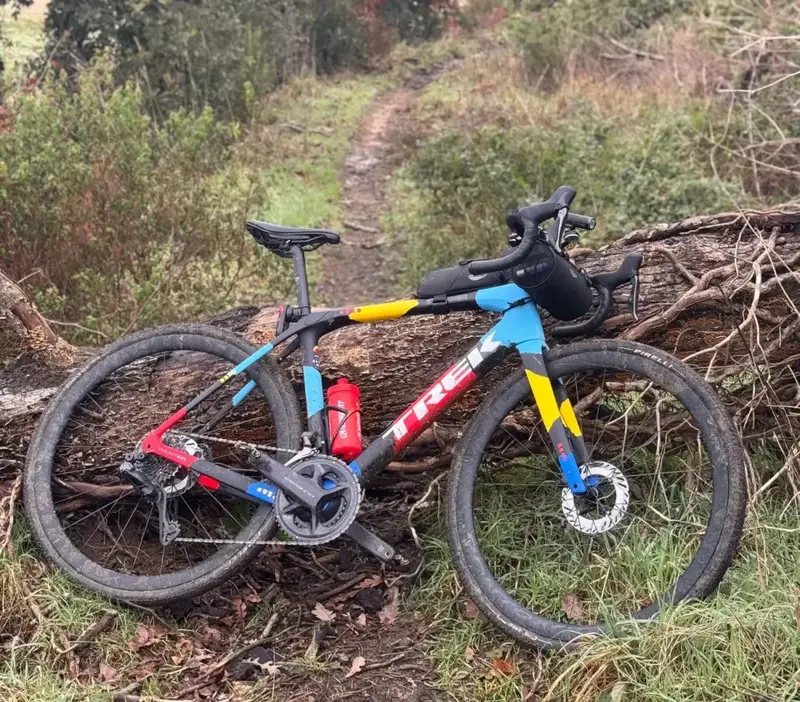
The frame: OCLV 800 carbon and balanced geometry
The Domane SLR 7 is built with Trek’s most advanced OCLV 800 carbon: light but strong, responsive but able to absorb vibration. The geometry is endurance, so more relaxed than a pure race bike, but never sluggish.
The key is the rear IsoSpeed system, a Trek technology that lets the seat tube flex in a controlled way, damping vibrations and absorbing bumps from rough surfaces. It makes all the difference, especially when you ride for days and spend hours in the saddle.
When you ride it, the bike feels alive, working with you. It supports you and protects you. It seems to say: “Go on, I’ve got you.”
Sardinia: the west coast on 35 mm Pirelli Cinturato tyres
My first big test was in Sardinia, riding the whole west coast from north to south: a wild, beautiful and quiet route. The roads are a constant roller coaster of bends, climbs and descents, broken tarmac and wonderful views.
For this trip I fitted 35 mm Pirelli Cinturato tyres, tubeless, to ride the roughest sections with more peace of mind, and it turned out to be the right choice. Road bike or not, the Domane took the wide tyres without any problem and became a sort of all-road bike, floating over the worst tarmac without losing speed or control.
On the technical descents between Bosa and Oristano, and on the ups and downs of the Iglesiente, the Domane was impressively stable. The Bontrager Aeolus Pro 37 wheels performed very well, smooth and safe even when the surface got rougher.
Sicily: hundreds of kilometres on the island’s real back roads
In Sicily I wanted to test the Domane in even harsher conditions. During my last winter stay on the island I rode hundreds of kilometres on some of the best “worst” back roads in the region, the ones local cyclists know well.
This is where the Domane really showed what it’s made of. Riding these roads on it was comfortable, smooth and safe. No vibration ever felt out of place, even on stretches full of potholes. It was so comfortable I often forgot I was on a road bike.
And despite the tough terrain, I could keep a good average speed, which made long transfers much more efficient than on a pure gravel bike.
If you want to compare the Domane with another great endurance bike, read my full review of the Giant Defy, on the differences, the riding feel and the design philosophy. If you love bikes built for long-distance travel, it’s worth a read.
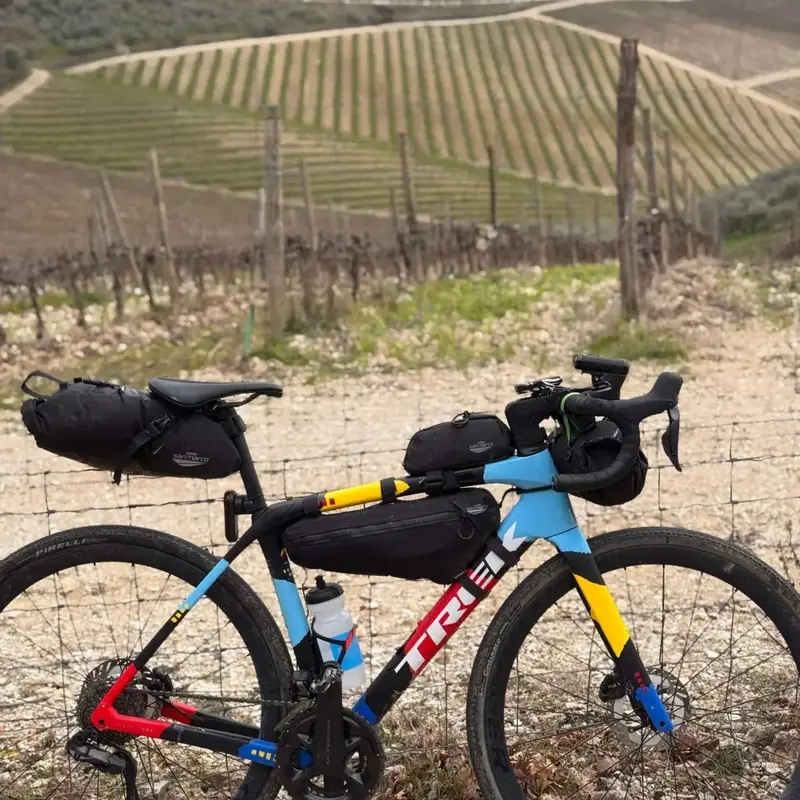
Groupset: Shimano Ultegra Di2 12-speed
The drivetrain is a 12-speed Shimano Ultegra Di2: a great choice, with precise, smooth and quiet shifting in every situation. Uphill, even under load, the shifts are instant. On the flat, the gear steps feel natural. Downhill you forget about shifting: the bike seems to know what to do.
Di2 is a system I have come to really appreciate on the road: no cables to adjust, no hesitation. It always works, and it lets you focus on what really matters: pedalling.
Smart details: everything in the right place
One of the best things about the Domane is the details designed for travelling cyclists. The most obvious is the storage compartment in the down tube, where you can keep a multitool, inner tube, CO2 and small items, neat and easy to reach. It seems like a small thing, but it changes how you organise your bike.
Other details:
- Fully internal cable routing, for a clean, aerodynamic look.
- Mudguard mounts, ideal for winter or wet roads.
- Clearance for tyres up to 38 mm, which greatly widens what you can do with it.
Real-world performance: uphill, downhill, on long days
It isn’t a race bike, but the Domane surprises you when you pick up the pace. On climbs it responds steadily rather than explosively. The riding position lets you push without discomfort. Downhill, stability is one of its strengths: it gives you confidence, even fully loaded or on slippery surfaces.
And then there are the long days, where the Domane is at its best. After six or seven hours in the saddle you feel the difference: your hands are still fine, your back isn’t wrecked and your head is clear. You realise you could keep going, another 50 km without any trouble. When you are in the middle of a trip, that is gold.
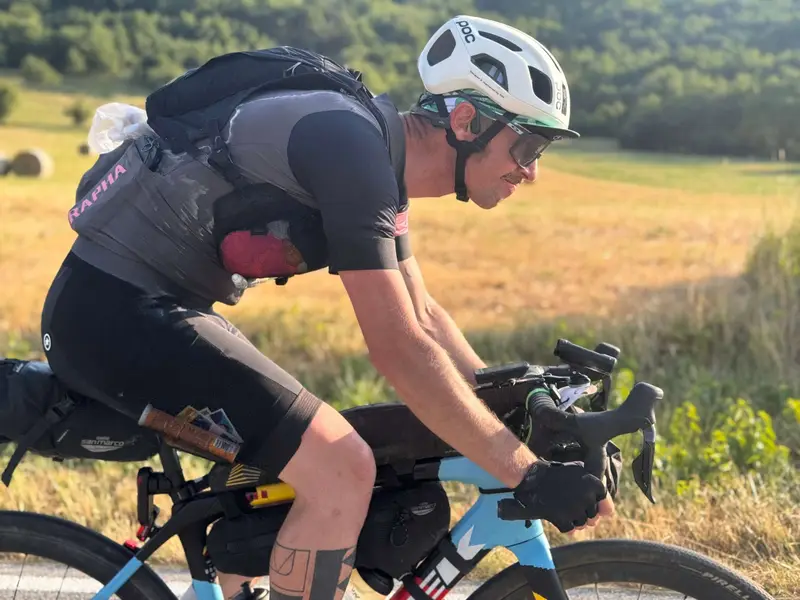
Great for road bikepacking too
If you love long-distance road bikepacking events, the Domane SLR 7 is an ideal companion there too. It stays comfortable and stable for many hours, which makes it perfect for events like The Grand Escape, one of the most fascinating events on the Italian long-distance road scene.
I will soon write an article about The Grand Escape, on what it means to take part in an event like this, what the real difficulties are and how best to prepare.
Pros and cons (very few cons)
Pros
- Real comfort over any distance
- Responsive frame that still filters the road
- Details designed for travelling
- Clean looks and high-end finish
- Room for wide tyres (up to 38 mm)
- Totally reliable in every situation
Cons
- Expensive (but the quality justifies it)
- A little heavier than race bikes (but worth it)
- Not for those who just want to go flat out on every ride
Conclusion: a bike that makes you want to ride
The Trek Domane SLR 7 Gen 4 isn’t for everyone. It’s for riders who know what they are really looking for in a bike. For those who know that what matters isn’t arriving first, but keeping going day after day, kilometre after kilometre, with a smile, without pain and without compromise.
It’s a bike that keeps you company, respects you and pushes you. A bike you won’t want to replace after three months, and that makes you start planning your next trip.
If you are looking for a companion to ride far, and to ride well, this is the right bike.