
Tuscany Trail
The Tuscany Trail, the world’s biggest unsupported bikepacking event: its story, the Tuscan white roads, what “unsupported” means, and how to prepare.
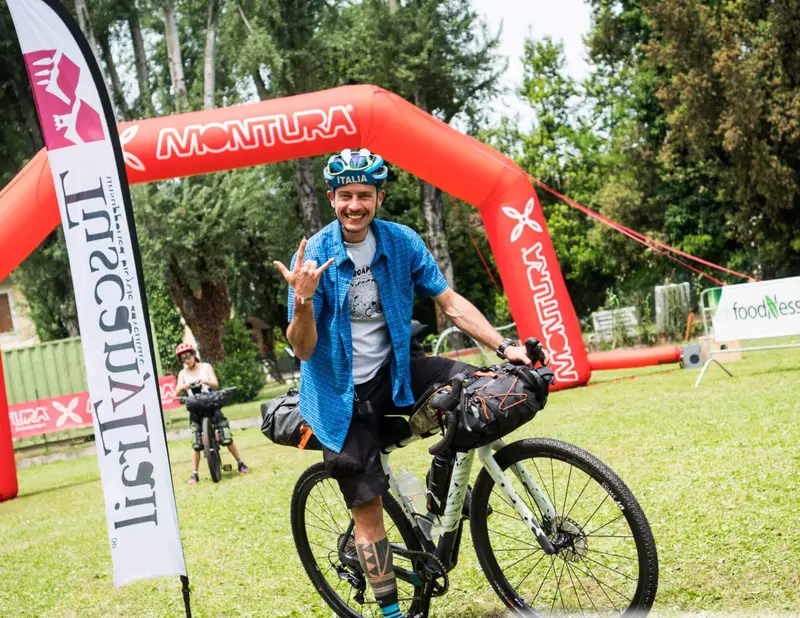
The world’s most famous bikepacking event
The bikepacking event that changed adventure cycling
The Tuscany Trail isn’t just a bikepacking event: it’s a real phenomenon that has changed the way people experience adventure cycling in Italy, drawing more and more riders onto routes where nature, history and culture come together. It started as a gathering of a few pioneers and soon became a must for anyone who wants to challenge themselves and push their limits, riding white roads and scenic tracks with views you won’t forget.
Today the Tuscany Trail is recognised as the biggest unsupported event in the world, and more than 6,000 riders are expected at the 2025 edition, all sharing the same passion: travelling by bike, self-supported and close to the land around them. That number shows how much people want authentic experiences, where the sporting challenge goes hand in hand with discovering a place and the desire for freedom.
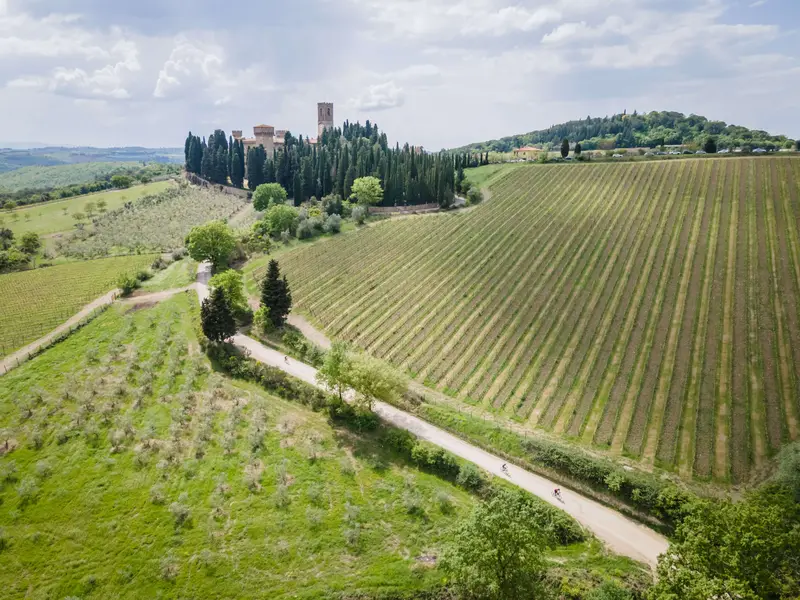
The event has inspired many cyclists to go on their first real bikepacking trip, often without ever having ridden several days in a row with bags and a tent. The rolling hills of Tuscany, dotted with vineyards and cypresses, are the perfect setting for a journey that is not only physical but also inward: anyone who rides the Tuscany Trail knows that every climb, every dirt road and every village adds up to an adventure that goes far beyond the kilometres.
For many, the Tuscany Trail is also the perfect chance to make new friends and meet people from all over the world and from very different backgrounds. It’s common to stop and share a meal, a coffee or just a smile with other riders, and many of those bonds last long after the event. Whether you’re looking for a personal challenge or a great adventure, it tests body and mind while you discover a region that never stops surprising you. This mix of sport, good company and beautiful landscapes is what makes the Tuscany Trail unique, and what leaves a deep mark on everyone who rides it.
From the beginnings to the bikepacking boom
The first editions of the Tuscany Trail started almost quietly, as a small gathering of friends who wanted something different from traditional cycling. A handful of enthusiasts, curious to explore new horizons, met to ride unpaved roads and quiet tracks, far from the traffic and from the intense competition of road racing. But from the very first rides it was clear this was more than a group ride: there was a special energy, something that called to everyone looking for a different way to ride.
The founding idea was to create a community of travellers on two wheels, where everyone felt free to share their experience, swap technical advice and travel stories, and help anyone who needed a hand along the way. There were no rankings and no times: the real goal was to enjoy every kilometre, take in the views of the Tuscan hills and build friendships that would last well beyond the finish.
Over the years, through word of mouth and growing curiosity about a more adventurous kind of cycling, the Tuscany Trail grew enormously. What began as a niche event became a reference point for the whole bikepacking world, attracting riders from all over Italy and abroad. Today it’s seen as a symbol of bikepacking culture in Italy: a meeting point for seasoned riders and beginners, for veterans and people discovering the charm of a dirt road for the first time.
This success is part of a global trend: more and more people want to reconnect with nature and with themselves. Riding back roads, away from the noise of the cities, becomes a chance to slow down, explore new landscapes and rediscover the pleasure of adventure. The Tuscany Trail captures that spirit perfectly: a challenge with yourself, taken on without hurry, enjoying every stop and every encounter. For anyone who wants to go beyond their limits and feel the thrill of a real journey, it has become a reference, where every dirt road carries a piece of history and every view gives you something to remember.
Tuscany: gravel paradise
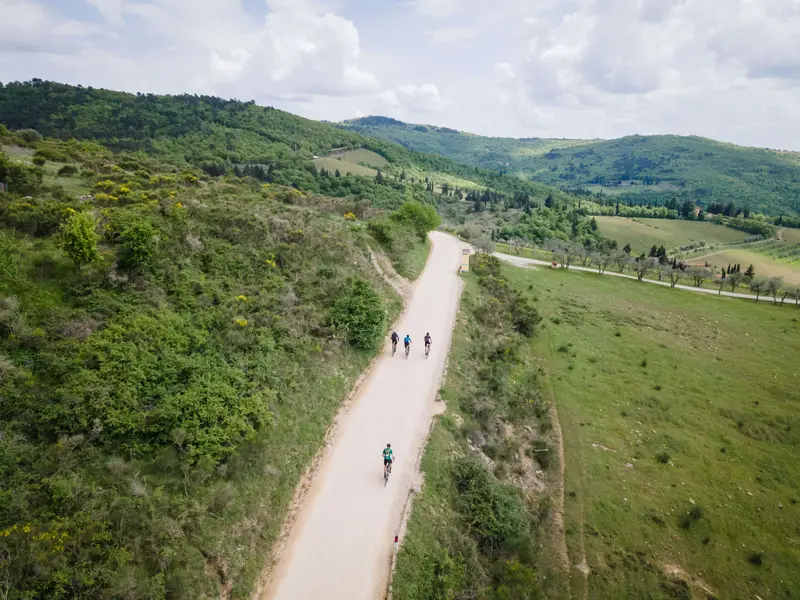
The word “Tuscany” already brings to mind rolling hills, old vineyards, endless olive groves and charming villages. Riding a gravel bike through these landscapes turns that picture into a full sensory experience. Along the famous white roads, part of a network of tracks that is centuries old, you ride through views that look like a Renaissance painting: golden wheat fields, rows of cypresses drawing geometric lines, stone farmhouses holding the stories of past generations.
What makes the region unique is also the great variety of landscapes. The Tuscany Trail route changes every year and touches different areas. You can go from the lunar landscape of the Crete Senesi, with their bare rolling hills and eroded gullies, to the views of the Val d’Orcia, where hills and valleys follow each other bend after bend. There are also the coastal areas, where the sea breeze keeps you company, and the green forests that give shade and cool air on hot days.
But Tuscany isn’t only nature: it’s a land full of history and tradition, where every village has a square, a church or a castle that speaks of another age. As you ride you will find welcoming agriturismi and B&Bs, often in restored old farms, where the owners welcome you with a smile, a simple meal, a comfortable bed and, above all, stories of local customs and legends. This deep-rooted culture of hospitality makes bike travellers feel at home everywhere, with plenty of places to rest, eat, refill water and set off again with fresh energy.
So exploring Tuscany by gravel bike becomes much more than a ride: it’s a journey for the eyes and for the mind, where your senses are constantly awake, with the smell of the earth, the colours of the sunsets over the hills and the real flavour of a cuisine built on local produce. That’s why the Tuscany Trail keeps renewing itself year after year: every edition is a chance to discover new corners and rediscover a region that, even if you have always known it, surprises you at every turn.
Your first bikepacking trip
For many riders the Tuscany Trail is their first real bikepacking experience. Some of them, until recently, only rode on tarmac, maybe on a classic road bike, and suddenly they have to deal with bags, gear for several days and navigating a GPS track. It’s a leap of faith, but within the first kilometres it becomes an exciting discovery: you realise that travelling by bike isn’t only physical effort, but a way to experience a place fully, in tune with nature and with the people you meet.
One of the things riders love most about the event is the solidarity between them. There is no official support, but it’s normal to see riders stop to help someone with a puncture, share some water or give advice on the next climb.
These moments of mutual help make the experience not just an individual adventure, but a chance to make friendships that often last. For those taking their first steps in bikepacking, the Tuscany Trail is a real baptism of fire: every problem solved, every climb conquered and every night outside your comfort zone is a step in your personal growth. When you cross the finish line you feel deeply rewarded, with a new confidence that comes from knowing you have overcome physical and mental challenges.
What “unsupported” really means
The Tuscany Trail is unsupported, meaning there is no outside assistance, and this is its beating heart. If you take part, you must be ready to rely on yourself for everything: food and water, mechanical problems, where to sleep, sudden changes in the weather. It may sound like an obstacle, but it gives you an amazing sense of freedom: you set the pace, decide where and when to stop, and whether to sleep in a tent under the stars or in a hotel booked at the last minute.
With no rankings and full self-sufficiency, every rider lives the route as a deeply personal journey, where every choice, from planning the next stage to managing your energy, becomes part of the adventure. Of course, this freedom comes with responsibility: before you leave it’s essential to study the route, find out where to resupply, where to find water and food, and which sections are harder. Being ready for changes in the weather and having a plan B for the night helps you avoid unnecessary stress.
In the end, the unsupported format brings out the best in everyone, and makes the Tuscany Trail a journey of growth and discovery: of yourself, and of a Tuscany that, even without outside help, turns out to be incredibly welcoming and full of surprises.
Preparation: the key to success
Preparing properly for the Tuscany Trail is essential to enjoy it fully and, above all, safely. It’s not only about building the endurance you need to ride long distances over the Tuscan hills, but about looking after every detail that turns a ride into a complete adventure.
First, train progressively, increasing the distance step by step and varying the terrain: from tarmac to the white roads to dirt tracks, each surface prepares you for what the route will throw at you. My advice is to do some multi-day practice rides with the bike fully loaded: this lets you test how your gear is packed and spot any problems with the load.
Just as important is getting used to navigating a GPS track. Knowing where to go isn’t enough: you need to be able to find your way if there is a detour or something unexpected happens. So I recommend practising in advance with your device, always checking battery and signal, so it never dies when you need it most.
Besides physical and technical training, don’t forget mental preparation. A sudden downpour, a puncture or a small navigation mistake can test your motivation. In those moments, reading about other bikepackers’ experiences can really help. I have shared many tips and strategies in my bikepacking series, where I talk about how to deal with difficulties on the trail. The first episode gives you the basics, while the second episode looks at bags, loads and multi-day rides. If you want more, don’t miss the third episode and the fourth episode, with more tips for handling the unexpected and staying motivated.
Finally, before you leave, give your bike and gear a thorough check. Make sure everything, from gears to brakes, bags to accessories, is in perfect working order. That way you can set off with peace of mind, knowing you have done everything you can to reduce the risk of problems along the way.
With good physical, technical and mental preparation, every kilometre of the Tuscany Trail becomes a chance to grow, every challenge an achievement and every stage a lasting memory.
Gear: the art of the essential
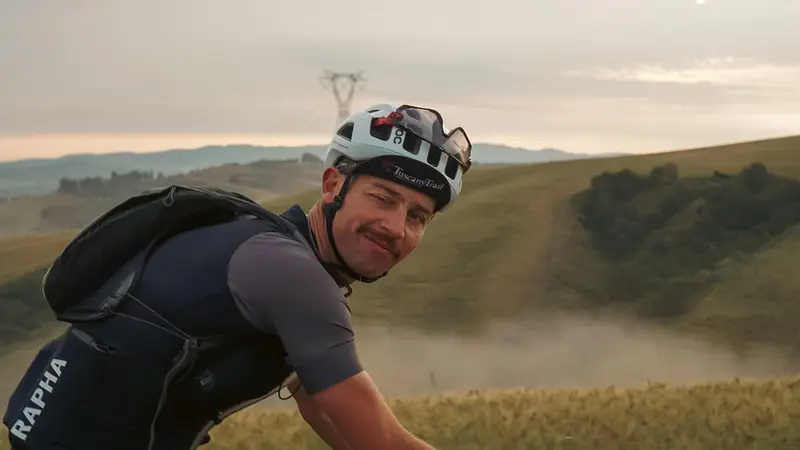
One of the secrets to enjoying an event like the Tuscany Trail is choosing the right gear. Avoid carrying things you don’t need: every extra kilo makes the ride harder, especially on the hills. Imagine climbing a steep hill with badly balanced bags: a small mistake can slow you down a lot. So pack your saddle, frame and handlebar bags with great care, and only take what is truly essential.
Technical clothing that adapts quickly to the changeable Tuscan weather is a must. Just as important is a reliable repair kit, with inner tubes, patches, a multitool, tyre levers and, if you run tubeless, a plug kit for quick fixes. Don’t forget your GPS, with a spare battery or a power bank, so you never lose the route. Lights are essential if you plan to ride at dawn or in the evening, and good rain gear can save your day in a sudden downpour. There are no organised stops, but along the way there are plenty of chances to refuel, take a break or swap tips with other bikepackers.
The real spirit of the event
The Tuscany Trail is a physical and technical test, but it also has a very special human atmosphere. Far from the frantic pace of racing, riders experience it as a big celebration of cycling. Everyone rides it their own way: some ride in teams, some prefer the solitude of a journey inside themselves, others focus on efficiency to cover big distances in a short time.
Along the way, every kilometre is a chance to stop, take a photo of the sunset over a field of sunflowers, or simply enjoy the silence and the beauty of the landscape. Bonds form naturally: a chat in a village bar, a shared meal, helping each other fix a mechanical problem. These moments turn the ride into a shared experience, where friendships are born and last well beyond the event. This feeling of a travelling community gives the Tuscany Trail its unique, authentic character, far from the rules of racing: a real celebration of freedom and adventure on two wheels.
Conclusions and final tips
Taking part in the Tuscany Trail means rediscovering the bike as a way to travel, to look inside yourself and to be free. Before you sign up, commit to steady, progressive training, looking after both your fitness and your technique. Prepare your gear carefully and study the route to anticipate the challenges ahead. But remember that in bikepacking improvisation is part of the adventure: you might ride on late, caught by a beautiful sunset, or change your plans because you met new friends along the way.
If you would like to ride the Tuscan white roads before or after the event, with routes and logistics already sorted, have a look at my self-guided tours.
And if you want to go deeper, I have published a series of articles on bikepacking and other topics on my blog, with detailed tips on preparation, packing, GPS navigation and much more.
Get ready for an adventure that is not only physical, but a journey of personal growth and discovery. The Tuscany Trail is waiting to show you what freedom on a bike really means, where every climb and every shared stop becomes part of a story you will tell for years.
Thanks for reading.