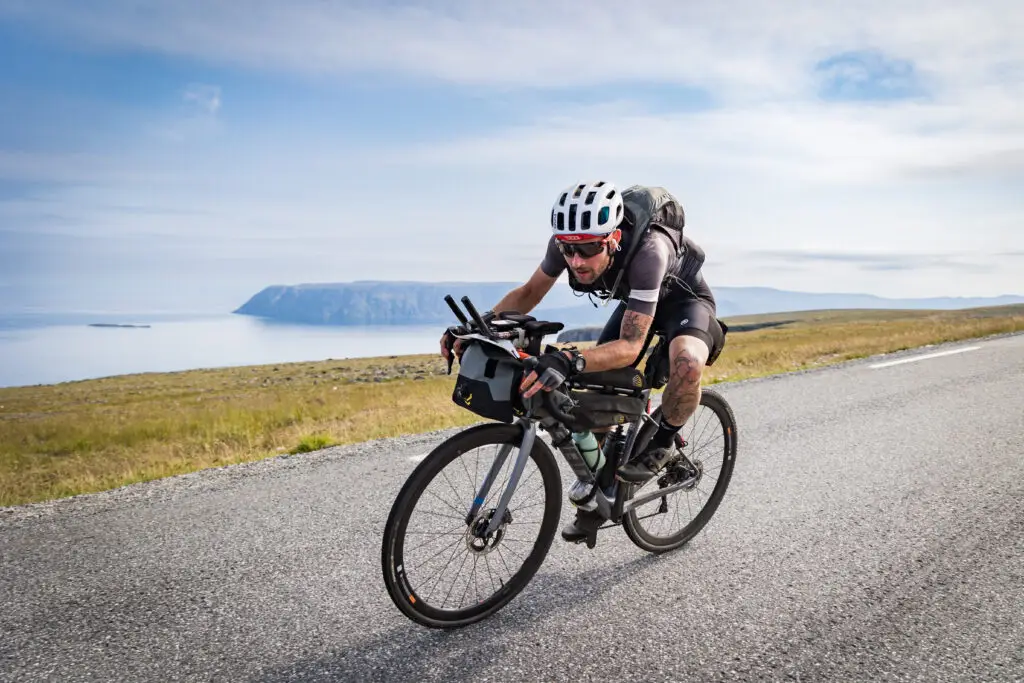
THIRD EPISODE OF THE SERIES ON BIKEPACKING
The importance of planning
Introduction
Welcome to the third episode of my series on bikepacking, written in collaboration with Selle San Marco. Today we will delve into a crucial aspect of any bikepacking adventure: planning.
You will discover how to best prepare your trips, reduce risks and enjoy each ride with peace of mind.
The importance of planning
Planning is one of the fundamental aspects of travel, often triggered by an inner desire to challenge oneself, the need for escapism or the dream of reaching a specific goal. Personally, I believe that every trip is first and foremost an inner exploration, an opportunity to learn about hidden aspects of one’s personality. During this stage, it is natural to confront doubts and uncertainties, but I always remember the Chinese proverb that states, “every journey begins with a single step.” Therefore, the important thing is to start traveling, and the rest will follow.
Based on my experience, I am aware that organizing the logistics of a bicycle trip can be complex and time-consuming, especially in the beginning. Careful planning can greatly reduce the risks associated with the adventure. Today, fortunately, there are many applications and software that facilitate detailed trip planning, allowing you to plan stages, know the expected distance and elevation. Tools such as Komoot or Ride with Gps offer solutions for both novice and professional users, greatly improving the planning process compared to the days when I traveled with a map and compass.
Over the years, I have become increasingly reliant on these technologies and have become an expert in bicycle trip planning. I have designed thousands of miles of routes, including details on maps and logistics, and continue to carefully plan each of my trips. If you are new to cycling, my advice is to plan your stages in a balanced way, trying to find the right balance between exercise, fun and adventure. Remember that it is not the distance traveled that counts, but the way you travel it: approach the trip with a relaxed and positive approach so that you attract positive experiences.
It is essential to organize logistics well, making sure you always have sufficient water and food available. Always wear a helmet, protect your skin with sunscreen and try to avoid the hottest hours for cycling. Plan your stops carefully and, if you are traveling in a country rich in food and wine culture like Italy, take tasty breaks at some good restaurants as a reward for completed stages.
If you opt for camping, make sure you get adequate rest by choosing places that offer you safety. Recovery is crucial, especially if you face multiple days of cycling. If, on the other hand, you prefer to stay in accommodations, you will travel lighter and be able to enjoy a well-deserved hot shower at the end of the day, making sure the hotel offers a safe place to store your bike.
There would be many more tips to share, but the main thing is to approach each experience in the right spirit, in a relaxed, sincere and respectful way toward oneself and one’s surroundings. The bicycle proves to be the ideal means of exploring the wonders of extraordinary countries like Italy, offering a unique and unforgettable travel experience.
How to choose the destination
Italy is undoubtedly one of the most fascinating countries in the world, full of breathtaking cycling routes. When it comes to planning a route from one point to another in the country, my advice is to favor the less-traveled back roads.
This choice, the result of careful planning, has allowed me to cross Italy from north to south, rarely encountering motorized vehicles. Beginning to explore the region in which one lives, or simply the surroundings, can open up a new perspective on familiar places when observed from the saddle of a bicycle.
For those who want to experience cycling without the burden of planning, attending one of the many events organized in Italy can be a great place to start. Renowned bikepacking events such as the Tuscany Trail, weekend cycling events such as the Unpaved Roads, or on-the-road bikepacking adventures like The Grand Escape offer unique opportunities to immerse yourself in the culture of adventure cycling.
Most of these events provide participants with a predefined route, allowing them to familiarize themselves with the course ahead of time and ensure that the stages (which each participant plans himself or herself) are suitable for his or her level of physical fitness. The beauty of these events is that they are not competitions; there is no time limit, allowing each person to proceed at his or her own pace.
I recommend searching online or on social media to discover the wide range of routes and events available in Italy, which are undoubtedly some of the best ways to approach the world of bikepacking and bicycle touring.
Minimalism in bikepacking
Traveling by bikepacking becomes a practical lesson in minimalism, as the small space in your bags forces you to carefully consider each piece of equipment you decide to take with you. Each item must be essential and potentially useful in different situations.
As a result, you may find yourself needing to upgrade your gear to more compact, multifunctional versions. A useful trick is to organize the spaces inside the bags carefully, as mentioned above, and wrap your items, especially clothing, in plastic bags. Although bags are designed to be waterproof, it is always best to prevent this, thus ensuring that you always have dry clothes on hand. This advice also proves invaluable during warmer periods when the weather can suddenly change.
Separating clothing into bags also helps you keep them organized and easier to find when needed. It is essential to aim for lightweight material, as the less weight you carry, the less fatigue you will experience while traveling. However, gaining the right experience to fully understand these principles takes time. Personally, it took me over a decade to refine them, remembering my early travels where I carried an excessive amount of unnecessary items with me. Now, with optimized equipment, I can travel for weeks or even months with the same gear, proving how crucial the minimalist approach is in bikepacking.
Navigation: Maps, apps and GPS
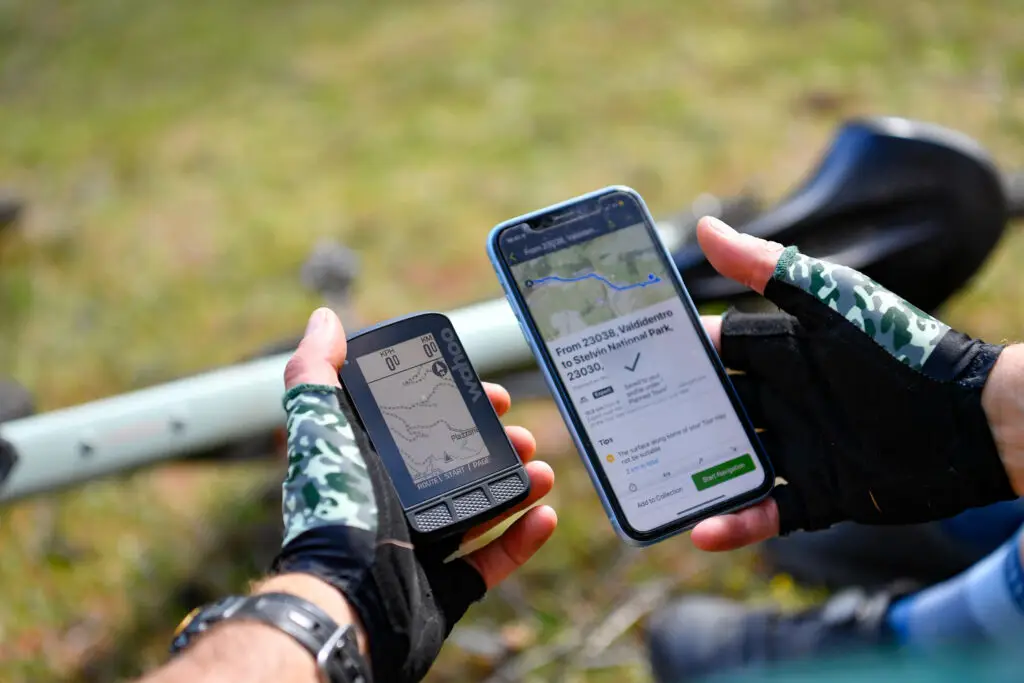
My early travels were romantic adventures, guided by a map marked with highlighter and a compass attached to my handlebars. That era taught me the value of discovery and provided me with practical skills in map reading and compass orientation, skills that I believe are fundamental and that I make a point of passing on in my courses. Knowing the principles of traditional cartography is, in fact, the basis for understanding modern navigation, which is dominated by GPS and bicycle navigators.
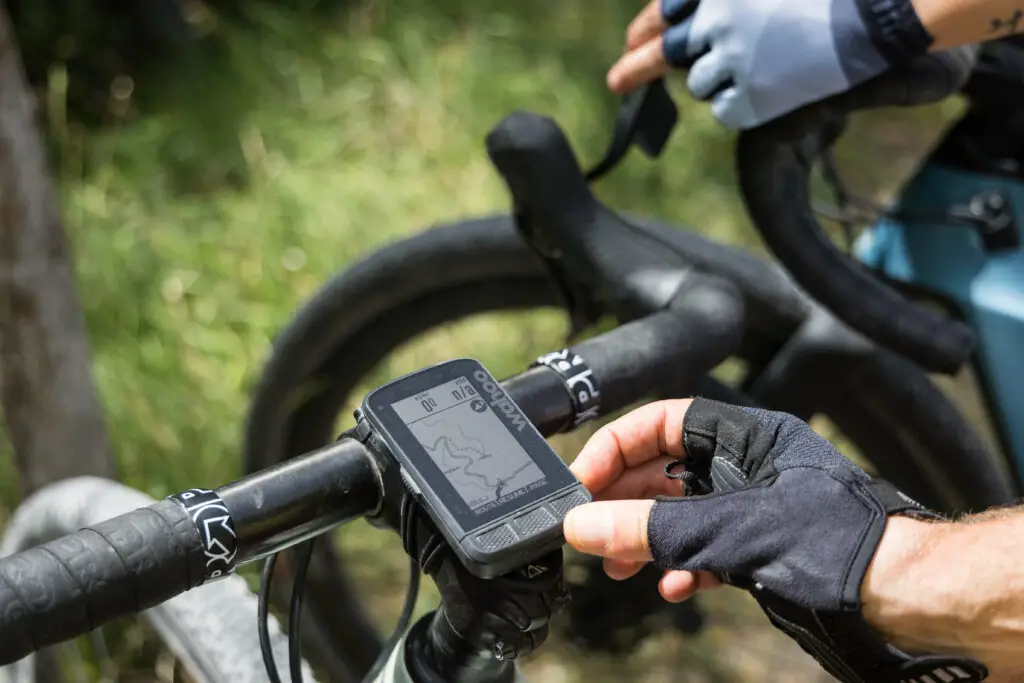
The advent of navigators has transformed the world of navigation. Today you can load your route onto your device, attach it to your handlebars and let it guide you. Navigators offer a wealth of useful information as you travel, such as distance traveled, distance remaining, average speed, details on climbs and descents, and elevation profile. Knowing one’s average speed, for example, is essential for calculating travel times, a crucial aspect of planning a bicycle trip.
If you are an avid cyclist, I highly recommend that you invest in a good navigator. Over the years, I have tested the best devices on the market and would be happy to share advice based on my personal experience. Now, the idea of cycling without a navigator is inconceivable to me, especially for multi-day trips, during which I organize the tracks based on the kilometers I want to travel or the places I want to visit. The navigator is an indispensable tool, especially for monitoring climbs and managing energy in the best way.
In addition, next to the navigator, I prepare some travel notes indicating refueling points, places where I can find water, food or lodging. Navigators have been a real revolution in cycling tourism, facilitating the development of non-competitive events, such as those previously mentioned.
Don’t miss the next and final episode!
To stay up-to-date on the series and discover new tips, sign up for my newsletter. Stay tuned, because the ‘episode will be all about security and online resources to find even more information for unforgettable bike rides.
Once again, I remind you to take advantage of the 15% discount on Selle San Marco products
Visit the Selle San Marco website and use the discount code: PEPPE-SSM.
Thank you for being part of this community of passionate cyclists.
See you in the next episode, always riding!
Want to stay updated on upcoming adventures and reflections in the world of bicycle touring, sign up for my newsletter
Stay connected and join our community of passionate cyclists!