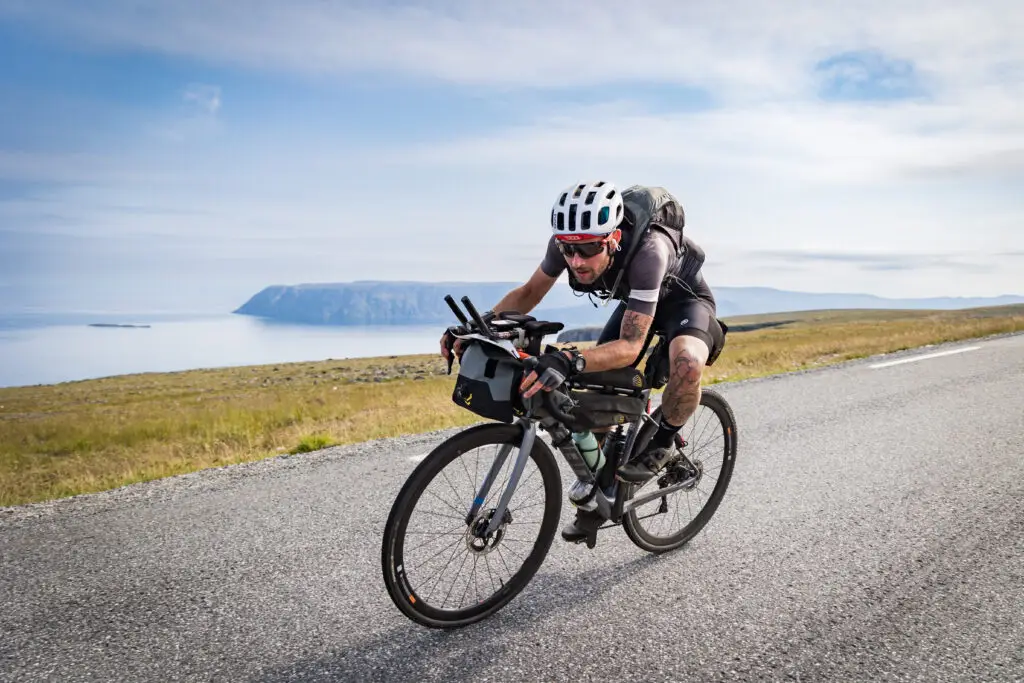
GRAVEL WITH ENDURANCE BIKE
When the line between asphalt and dirt fades away
Endugravel
Who said you necessarily need specific bikes to gravel? After months of testing and thousands of miles on Tuscany’s gravel roads, I can tell you that a well-equipped endurance bike can be your faithful companion even on gravel. But mind you, I’m not talking about technical single track or mountain bike descents – we’re talking about that wonderful world of unpaved roads that make our Tuscany unique.
The secret is in the clearance
The real magic of modern endurance bikes lies in their versatility. With clearance that allows tires up to 35-38mm, these bikes transform into perfect all-roads. It is precisely this feature that opens up a world of possibilities: you can go from a fast ride on asphalt to an adventure on white roads simply by changing tires.
I have experienced this on my own skin on several occasions, but especially on my last trip to Sardinia this winter. After a tire cut, I found myself facing rough roads mounting a Pirelli Cinturato 700×35 on the Trek Domane. It was the right choice: it allowed me to continue the journey and cross the bumpy roads without problems, giving me the freedom to leave the asphalt and begin the off-road adventure.
Something similar happened to me at the last North Cape 4000 where, after the second cut of a road tire, I eventually opted to mount a 35 gravel tire on the Giant Defy. I prefer a wide tire even when I am not necessarily doing gravel, but I am in regions where the asphalt is not the best – in Italy, we know this is the case in most cases.
Technology in the service of comfort
What really makes modern endurance bikes special is their ability to absorb vibration. We’re not talking about simple springy frames, but real systems engineered for comfort. Trek’s IsoSpeed system, for example, is a real revolution: it allows the seat tube to flex independently of the frame, absorbing shocks without compromising pedaling efficiency.
Giant, with its D-Fuse system, has taken a different but equally effective route. The “D” seatpost and specific handlebar work symbiotically to filter vibrations before they reach the rider. I personally tested it on the Defy, and the difference can be felt big time, especially after several hours in the saddle on dirt roads. These absorption systems , born for comfort on the road, prove valuable allies when tackling dirt. They do not replace a real gravel bike, but they create a technological bridge that makes endurance bikes surprisingly capable off the asphalt.

The legacy of the heroic
There’s something I learned from riding vintage bikes during the Eroica: you don’t need a specialized bike to enjoy dirt roads. I still remember my first Eroica, when I mounted a 25-tire and we rode down steep dirt descents with traditional brakes. How heroic our ancestors were to take on roads with those means that knew no asphalt back then! Having become familiar at various events with vintage and vintage bicycles, riding a modern bicycle offers many advantages, especially with regard to braking. It is obvious that you need a hybrid riding technique, a little bit of road riding a little bit of off-road riding, and being able to read the terrain in the best way.
Speed and comfort: a winning trade-off
By mounting a 35 or 38mm tire on an endurance bike, you get the perfect compromise between speed and comfort. Sure, you won’t have the same confidence as a gravel bike on very rough terrain, but on classic Tuscan dirt roads? The difference is made more by the technique of the bike.
The choice of tires: a crucial element
The real key to turning your endurance bike into a gravel-road machine lies in your choice of tires. A 35mm tire with an intermediate tread can work wonders. It will allow you to maintain good speed on asphalt without sacrificing grip on dirt.
One piece of advice I always give is to test the tire clearance. Although some manufacturers specify a certain tire size, it is always best to double check and make sure there is still some clearance between the frame and tire. I say this from experience: when the mud gets sticky and (I confess this has happened to me numerous times) you certainly don’t want to get bogged down in the middle of nowhere!
When endurance becomes gravel
The beauty of using an endurance for gravel is that you don’t have to choose: you can start your outing on asphalt, detour onto some dirt road, and get back on the main road without ever feeling out of place. It is this versatility that makes these bikes so special.
Some practical tips:
- Choose tires with an intermediate tread pattern
- Keep pressures slightly lower than the road standard
- Start with easy dirt roads to gain confidence
- Take advantage of the vibration-absorbing technologies of your endurance
- Check the frame regularly after strenuous outings
- Invest in good handlebar taping for more comfort
Conclusion
Modern endurance bikes have very little to envy their gravel cousins when it comes to tackling Tuscan gravel roads. With the right setup and a little technique, they can give you incredible experiences on both asphalt and dirt. The key is to understand the limits of the bike and respect them, without expecting to turn an endurance into a mountain bike.
PS: Stay tuned, because soon I will tell you about my experience with the new Trek Domane, a bike that is redefining the very concept of versatility on two wheels. And believe me, there’s a lot to be said for it.
Want to stay updated on upcoming adventures and reflections in the world of bicycle touring, sign up for my newsletter
Stay connected and join our community of passionate cyclists!